Sunday, December 7, 2025

Blog #12

Looking at Everything I've Done This Semester, What Stands Out as Meaningful?

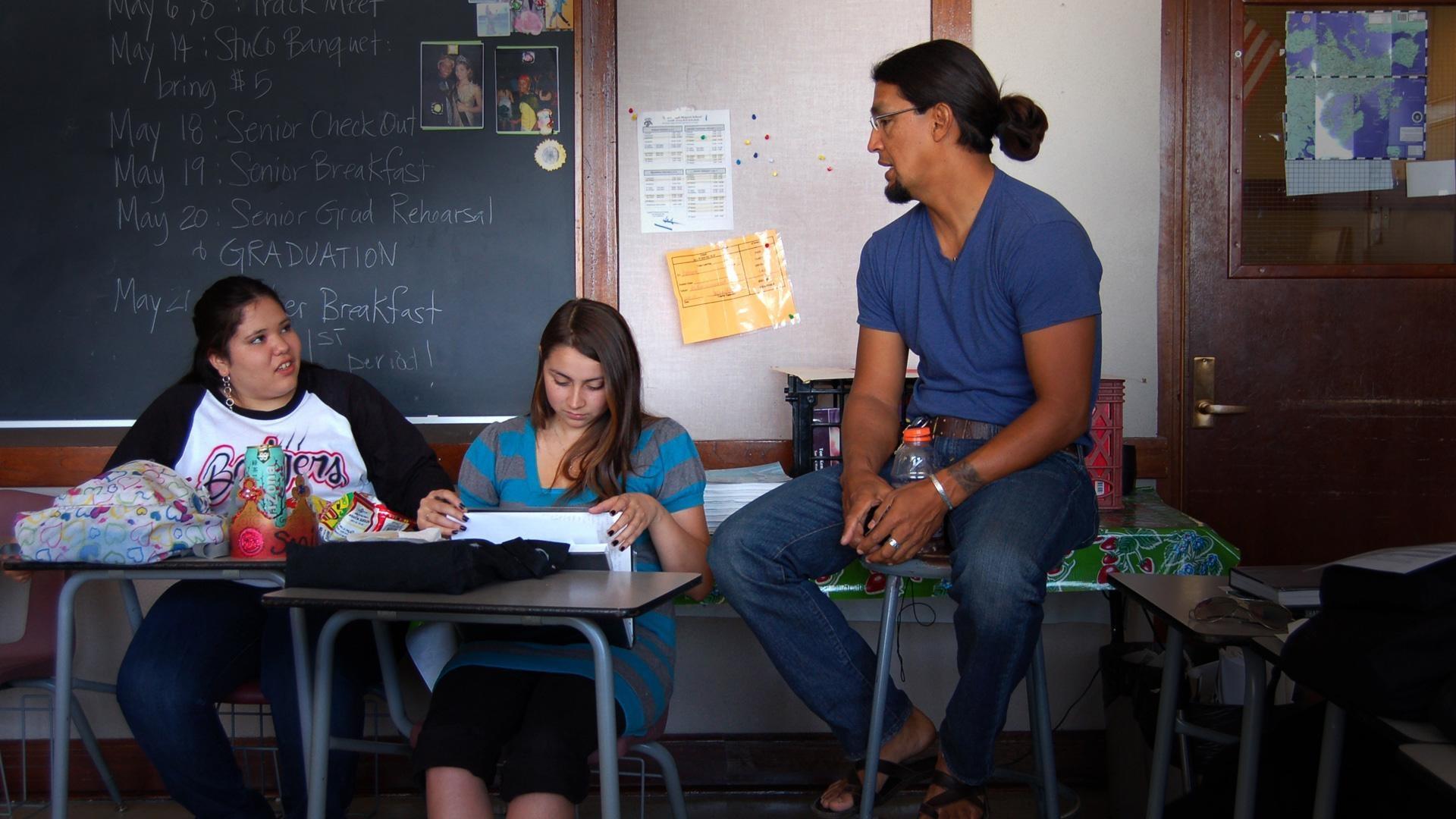
First, the documentary Precious Knowledge stood out to me because it highlighted the importance of ethnic studies and culturally relevant pedagogy. These were things that I hadn't thought about much before watching this documentary and taking this class. Seeing how well it worked for the students and how it united the school creating a sense of community inspired me.

Second, the reading Literacy With an Attitude stood out to me because it pointed out the clear injustices in our school systems today. It made me more passionate about becoming a teacher because I want to help students get a better education. The reading was also meaningful because I learned new things. I learned just how different education is depending on the wealth of districts. 

Lastly, the card game activity we did in class stood out to me as meaningful. It helped me understand The Silenced Dialogue because I experienced what Delpit describes that students go through. It also made me introspective because what my response to misunderstanding was and realized that it's something I want to change.  

Saturday, November 29, 2025

Blog Post #10

What is Neurodiversity? by Caroline Miller

Three Quotes

"Recognizing neurodiverse people as having differences, rather than deficits, is important."

It is important for neurodiverse students to be seen by their assets, rather than their deficits. Teachers who see disabilities as deficits are likely to alienate and  prevent students from reaching their full potential. Trying to "fix" disabilities does not work and will worsen student's education. There are strengths to neurodiversity such as creativity, hyper-focus, and diverse perspectives. 

"Getting an evaluation is an appropriate next step, though it’s helpful not to promise the child that the evaluation will automatically lead to the diagnosis they are seeking."

This quote is important for students who suspect they are neurodivergent and their guardians. It is very important for students to be correctly diagnosed by a professional when it comes to this concern. Getting an accurate diagnosis will help students,  parents, and teachers understand how to help the child function and thrive in all aspects of their life. When someone diagnoses themselves inaccurately, they might do more damage to themselves by implementing strategies that are not helping them.

"Proponents of neurodiversity argue that some impairments affecting kids with autism, ADHD, and learning disabilities are environment-related."

This quote is important to explain why neurodiversity needs to be acknowledged by neurotypical people, especially teachers. Neurodiverse students struggle to learn and thrive in environments that are designed for neurotypical students. Acknowledging neurodiverse student's environmental impairments and creating a welcoming and comfortable environment that meets their needs will help them function well.
Understanding Neurodiversity — Birdability

Reflection:
It is important for everyone, especially teachers to be educated on neurodiversity. It is something we should embrace as a society because it can create inclusivity for everyone, even neurotypical people.


Blog Post #9

 Troublemakers, by Carla Shalaby

In Troublemakers, Shalaby argues that students who "act out" have a right to be free as much as their peers. She thinks that the violent environment around them mixed with the hierarchy in the classroom teaches students that some lives are more valuable than others. She explains, "our children are learning that only some lives matter, that only some deaths are tragic, that only a precious few deserve relief from suffering (18)." In school, children learn that quiet, rule following, pleasant students are the ones who matter. This encourages troublemakers to act out because they don't see themselves as valued. These students are punished, mistreated, and lose freedom to be seen as a full human being. "Troublemakers" become marginalized and excluded from socialization and education, making them more vulnerable to the school-to-prison pipeline; especially children of color. Shalaby argues that we can learn about freedom from these students. She suggests that these students disruptive behaviors can signal to us that there is something wrong with the way things are going. Instead of blaming a students behavior on their internal health, we should examine the classroom environment as the problem. Shalaby points out that school environments, classroom management, students expectations, and traditional education can be toxic for children. Troublemakers might just be more vulnerable to be damaged by this toxicity. 

Acting Out in School: When Your Child is the Class Troublemaker – Utopia  International School

Reflection:
This reading has helped me understand the "troublemakers" I have encountered in my service learning experience more. I've always thought that students who act out are not to blame because there is obviously something making them act that way. I would like to read more of this book to hopefully learn how to transform the classroom to treat these students equally and educate all of my students as well as possible. What are some strategies that you guys think could work?

Tuesday, November 11, 2025

Blog #11

After reading the Rhode Island Department of Elementary and Secondary Education Guidance for Rhode Island Schools on Transgender and Gender Nonconforming Students, I was mostly impressed with their policies. They state that students are be allowed to use the bathroom, locker room, pronouns, name, and uniform that corresponds with their gender identity. This quote gave me hope for the well-being of transgender students: 

Some students may feel uncomfortable with a transgender student using the same sex-segregated restroom, locker room or changing facility. This discomfort is not a reason to deny access to the transgender student. School administrators and counseling staff should work with students to foster understanding of gender identity and to create a school culture that respects and values all students. Schools could consider gender-neutral restrooms and/or gender-neutral changing facility in the design of new schools and school renovations.

I'm glad that Rhode Island's solution to potential discomfort from cisgender students is to educate them on gender identity and foster a positive, respectful school environment. 

The only issue I found is the athletics policy. I only knew to look for this because I attended Syed Menebhi's talk about supporting transgender youth. This policy makes transgender students get approval from the school administrator and RIIL before they can play on a team that's consistent with their gender identity. This can be problematic because administrators and the RIIL might discriminate against trans students and prevent them from playing. 

Personally, I'm not sure where I stand on the "issue" of trans athletes. I don't think that any student K-12 should ever be forced to play on a team that doesn't correspond with their gender identity because at that age, sports are important for students social lives and sense of community. A lot of fake news has spread about trans athletes and unfortunately it has swayed people's opinions. I do not think that a FTM transgender athlete who has never taken estrogen/hasn't transitioned should be able to participate in something like the olympics on the women's team, but I do not think anyone is even trying to do that. It seems like a big fuss over something that is very uncommon. 

At the end of the day, trans rights mean rights for EVERYBODY. Because of transphobia, cisgender people have been harmed too. I've seen multiple videos of cisgender women who look androgynous being harassed by people who think they are in the "wrong" bathroom. Olympic champion Caster Semenya- a cisgender woman was banned from competing in 2019 unless she took drugs to lower her naturally high levels of testosterone. The European court of human rights ruled that she was discriminated against although the Olympics has not changed its policy about testosterone testing. This way of thinking is an invasion of privacy for everyone.

A Perilous Moment for Transgender People in the United States - Open  Society Foundations

Reflection: 

I'm curious to know my classmate's opinions on this topic. Am I being disrespectful to the transgender community in this post? I feel bad for even entertaining the debate on trans athletes because I don't think that someone's right to live as who they are should be up for debate. I think it is important to be able to have vulnerable conversations like this though. 

Wednesday, October 22, 2025

Blog Post #8

 Literacy with an Attitude by Patrick Finn

Reflection:

    Literacy with an Attitude is a valuable resource to me as a future teacher. It has made me much more aware of some issues with the education system today. I now have a clear idea of how different social classes are educated. Learning more about this problem has given me another reason to teach. Since I am an art education major, it is important to me to have a job at a public school in a working or middle class district because I want to provide students with an outlet for creativity and an opportunity to break free of the expectations of their core curriculum. The concept of class reproduction really disturbs me because it is so prevalent. Education should not be designed for it! I want to challenge the system that has low expectations for students. I want to use my privilege of a college education and the ability to take wonderful courses such as this one to try to make a change. I don't need to fix the system, just being a good teacher to students who need one is my goal. This class reminds me why I want to be an educator!

    It really bothers me how much social class affects education and it put my education experience into perspective. I recognize my privilege learning more than working class schools but I also feel cheated that I did not experience some concepts associated with higher class education. Courses like this one are enjoyable to me because I am used to giving formulaic answers and only learning what the teacher wants me to. 

Below is a visual of social reproduction theory which is closely related to class reproduction, it is just broader than only class.

Social reproduction theory | Social Stratification Class Notes

Visual of social reproduction theory


Comments:

This has definitely been one of my favorite readings in this class so far. I like it so much because it has put what I already knew to be true into clear words with evidence to back it up. I think that everyone in America can benefit from reading this. 


Sunday, October 5, 2025

Blog Post #7

 
 What to Look for in a Classroom by Alfie Kohn and "Introduction to Culturally Relevant Pedagogy"

When watching "Introduction to Culturally Relevant Pedagogy," I was reminded of the documentary "Precious Knowledge" because the video explains the importance of connecting students education to their culture or "culturally relevant pedagogy." This is the same pedagogy behind the ethnic studies program in the documentary. An important quote from the assigned video said by Jacqueline Jordan Irvine is "We have to remember that students approach learning not as cultural blank slates...culturally responsive pedagogy build on students' prior knowledge." This is such a useful way of thinking for teachers because students become much more engaged when they can make connections with curriculum and their lived experience. This is what made the ethnic studies program so important in Precious Knowledge. The student in documentary were remarkably engaged, and parents noticed a positive change in their children's attitudes towards school once the program was implemented. 

Independent Lens: Precious Knowledge: Closing the Achievement Gap in Tucson  Sc                    What to Look for in a Classroom also reminded me of Precious knowledge. Many of the 'good signs' in the chart were things that I observed in the students' classrooms. I saw a frequent hum of activity, eager students, thoughtful discussions, student collaboration, and "purposeful clutter."

Reflection: I also want to connect "Introduction to Culturally Relevant Pedagogy" to Shifting the Paradigm from Deficit Oriented Schools to Asset Based Models: Why Leaders Need to Promote an Asset Orientation in Our Schools by Shannon Renkly and Katherine Bertolini. The reading and video both use asset based models of teaching instead of deficit based. Using students' culture to enhance and shape their learning uses an asset based model. Seeing students' culture and backgrounds as something that could negatively impact their learning would be deficit based. 

Wednesday, October 1, 2025

Blog Post #6

 Other People's Children by Lisa Delpit

https://drive.google.com/file/d/13uwa4Ia50poEpUD2QJUnIY76if7HhF9W/view

The Silenced Dialogue”: Lit Review 3 – Michelle Mendola

    In this article Lisa Delpit argues that the culture of power and the silenced dialogue leave some students (mostly minorities, ESL, & lower class) at a disadvantage. The culture of power is something found in most schools, it is when the dominant culture (white/upper-middle class) is reflected in schools through rules, teaching, and language. There a different verbal styles of communication- white/mainstream culture styles of communication are typically used in the classroom. This is the culture of power. Teachers with power must acknowledge its existence in order to teach every student. All students come from different backgrounds and home-lives; this means that we should teach without the assumption that all students automatically understand the culture of power. If teachers make this assumption, it can lead to miscommunication between teacher and student. It can even lead to students being punished for doing nothing wrong! Teachers should explicitly say what the mean when giving rules and instructions. This will help students learn and acquire the code of power and set them up for success. The silenced dialogue is what happens when student who are not familiar with the culture of power are silenced because of it. These students learn to disengage and not try to communicate becuase they have been shut down too many times by people unwilling to understand them. I will end with this powerful quote from the article: “We must keep the perspective that people are experts on their own life. There are certainly aspects of the outside world of which they might not be aware, but they can be the only authentic chroniclers of their own experience.”

Reflection:

This article was hard for me to completely understand at first. After talking about it in class, doing group work, and doing the card game activity in class today, I feel like I have a firm grasp on the concepts discussed in the article; it actually makes so much sense now and it is something I have seen and have experienced in my own life! My question for the class or any commenters is how do these concepts relate to the card game activity from today's class?


Sunday, September 21, 2025

Blog Post #5

 Reflection:

When reading The Academic and Social Value of Ethnic Studies by Christine Sleeter, I was reminded of my experience in school. I have realized in the past five years that my history education has been very white-washed. I agree with Sleeter that American education is very Euro-centered despite efforts for changes to be made. According to the author, the mainstream curricula "continue to disconnect racism in the past from racism today, and to frame perpetrators of racism as a few bad individuals rather than a system of oppression, and challenges to racism as actions of heroic individuals rather than organized struggle (2)." Something I have been thinking about since high school is how the only heroic figures we learned about from the civil rights movement were Martin Luther King Jr. and Rosa parks. I question this because we did not learn about historical movements such as the Black Panthers or figures such as Malcom X. I think that this is censoring history. All of the civil rights movement should be taught in American history classes, even parts that people see as "controversial." The same thing goes for other topics that get sugar coated such as the genocide of Native Americans or the extreme horrors of slavery. 

The Black Panthers and the Breakfast for Children Program : Blog

pictured above is a poster promoting the Black Panther Party's "Free Breakfast for Children Program." This is an example of history left out of curriculum that should be taught. Did you know that this program was the first to provide hungry students with free lunches?

Linked below is an article explaining how MLK's legacy has been watered-down in classrooms. It makes another important point that MLK, while his legacy is taught in classrooms- a lot of important information is left out--changing the narrative.

https://www.edweek.org/teaching-learning/mlks-legacy-in-the-classroom-truncated-and-tidied-up/2018/04


Reflection/Questions/Comments:

My question for the class is: why do you think that schools teach lesson on MLK instead of Malcom X? Personally, I think that educators and curriculum designers are scared to teach about any form of protest that is not completely peaceful. They also want to only idolize "perfect" historical figures. Educators are sometimes afraid to add nuance to history. This might be my experience because I have had mostly white teachers in my K-12 education. Another example is how teachers of mine have glazed over or not even mentioned the fact that figures like George Washington and Thomas Jefferson owned slaves. I would like to see a more honest approach to America's past and present in History curriculum. 

Wednesday, September 17, 2025

Blog #4

"Shifting the Paradigm from Deficit Oriented Schools to Asset Based Models: Why Leaders Need to Promote an Asset Orientation in our Schools" by Renkly and Bertolini argues that schools should use an asset based model rather than a deficit based model to improve educational development. Traditional deficit based models focus on what students can't do. This tends to put the blame on students if they're struggling. For students, this correlates behavior with intelligence and self-worth. For these reasons, deficit based thinking does not support growth. Asset based models instead focus on what students CAN achieve. Focusing on students' strengths and competencies promotes growth and positive development. Renkly and Bertolini explain that "The asset model promotes the success of every student by sustaining a school culture and instructional program conducive to student learning through collaboration, trust, and a personalized learning environment with high expectations for students (24).'" An asset based model helps students grow and enjoy their classroom environment.

Reflection:

I enjoyed reading this article. I like how short and sweet it is. Asset/deficit based models have given a name and clear explanation to a concept I already had floating around in my head. My question for the class is: Can you think of a time in your education where you've experienced asset based or deficit based teaching? I've had a lot of great teachers over the years and I'd say they generally used asset based models although I can't think of specific examples. 

Shifting the ParadigmMoving from Deficit Thinking to Asset-Based Thinking in Teaching  Multilingual Learners | The International Educator (TIE Online)

Sunday, September 7, 2025

Blog #3

What Counts as Education Policy? by Jean Anyon in Quotes

Link to the article: What Counts as Education Policy?

Quote 1: 

"Job, wage, housing, tax, and transportation policies maintain minority poverty in urban neighborhoods, and thereby create environments that overwhelm the potential of educational policy to create systemic, sustained improvements in the schools (66)."

In this quote, Anyon explains why educational policy changes do not help student achievement in urban areas. She argues that no matter what policies are made to improve education, if students' environment outside of school is unfit, then they will lose potential. This quote is important because it is the main argument of the text. Anyon argues that educational policy has failed in urban areas because more significant public policy changes are needed. 

Quote 2:

"Education policy has not addressed the neighborhood poverty that surrounds and invades urban schools with low expectations and cynicism. Education policy has not addressed the unemployment and joblessness of families who will have few if any resources for the further education of their children, even if they excel in K–12 classes. And education policy — even in response to state financial challenges —has not addressed the political economy that largely determines low levels of city district funding (69-70)."

In this quote, Anyon explains why educational policy has failed urban schools. She is saying that poverty affects the morale of communities, which leads to low expectations and cynicism in adults and children; poor families can lack the necessary resources to improve their children's education or send them to college, and low levels of funding affect the quality of education more than any policy can. This quote is important because it supports her argument. Showing where educational policy falls short explains why public policy changes are needed.

Quote 3:

"To remove economic barriers to school quality and consequence, we can legislate a significantly higher living wage; we can create jobs in cities that offer career ladders and prepare low-income residents to fill them. And, like a number of European countries, we can tax wealthy families and corporations to pay for these and other investments. We should enforce federal anti-discrimination measures to integrate segregated housing and create public transit routes so low-income urban residents without cars are not denied access to jobs in the suburbs (83)."

In this quote, Anyon lists public policy changes that would bring money and resources to poor neighborhoods, therefore, improving education and raising levels of student achievement in affected areas. This quote is important because it is a call to action. Since Anyon is highlighting a problem, she has to provide a solution to make her argument worthwhile. 

Reflection:

I found this essay to be a bit frustrating because Jean Anyon has such a valid argument, but our government and education system will not adapt to her way of thinking. Honestly, while reading this essay, it felt depressing how obviously correct Anyon is because her argument should not even be a point that has to be made. Affluent neighborhoods have higher rates of student success because they are affluent (obviously!!). Instead of realizing the actual problem, the people in power blame teachers and students and implement policies that do nothing or even make teaching harder.

Tuesday, August 26, 2025

#1 Privilege, Power, and Difference by Alan Johnson

In Privilege, Power, and Difference,  Alan Johnson's argument is that in order for humans to get along, people with the most privilege in society must acknowledge the oppression of others, shed their shame, and take on the responsibility of eradicating privilege. Johnson's reason for writing this is that his own philosophy means that he should use his privilege to spread awareness and help fight oppression. Since he is a straight white man, his writing is also made to teach others with the same advantages as him the truth about racism, misogyny, homophobia, and all minority groups in a disarming way, which does not shame them. In the book, Johnson explains his main point, writing, "Understanding how to bring dominant groups into the conversation and the solution is the biggest challenge we face. My work in this book is to help find a way to meet that challenge. It is to identify tools for understanding what's going on and what it's got to do with us without being swallowed up in a sea of guilt and blame or rushing into denial and angry self-defense (11)." This quote sums up his argument. 

Reflection question:

I thought that Alan Johnson did an especially good job of disarming the reader. I recognize my privilege being a white woman, but I was not made to feel guilty by the author. I felt welcomed into the book. My question to the class is if you all felt the same way as me. Did you feel that the way the book was written was disarming? Did you feel like you were welcomed into the conversation on these topics? 

Blog #12

Looking at Everything I've Done This Semester, What Stands Out as Meaningful? First, the documentary Precious Knowledge stood out to me ...